



2-A, Khandwa Rd, next to Radhaswami satsang, Sector A, Rani Bagh Main, Indore, Madhya Pradesh 452001

When Should You Consult a Neurosurgeon? Early Warning Signs You Should Never Ignore – Dr. Mukesh Sharma

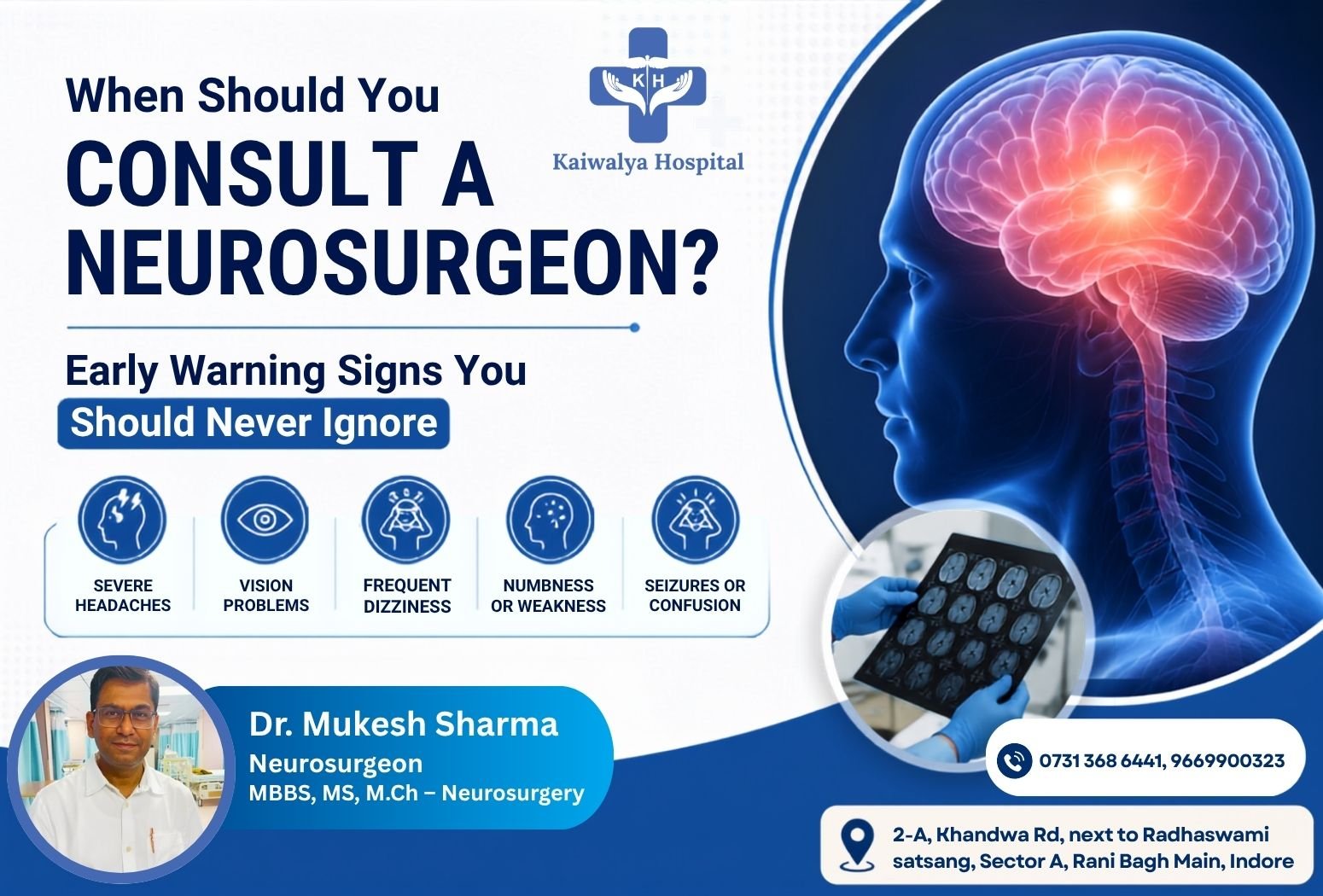
Medical awareness banner showing early warning signs that indicate when to consult a neurosurgeon, featuring a brain illustration, neurological symptoms, and Dr. Mukesh Sharma at Kaiwalya Hospital.

Neurosurgeon in Indore is one of the most searched terms by people experiencing persistent headaches, severe back pain, nerve-related problems, or symptoms affecting the brain and spine. Many neurological conditions develop gradually and may appear harmless in the beginning, but delaying treatment can sometimes lead to permanent nerve damage or life-threatening complications. Recognizing the early warning signs and consulting an experienced neurosurgeon at the right time can make a significant difference in recovery.

Dr. Mukesh Sharma, an experienced Neurosurgeon in Indore, specializes in the diagnosis and treatment of complex brain, spine, and nervous system disorders. At Kaiwalya Hospital, he provides advanced neurosurgical care for conditions such as brain tumors, spinal disorders, neurotrauma, slipped discs, nerve compression, skull base surgery, spinal endoscopy, and other neurological diseases using modern surgical techniques and patient-focused care.

Many patients ignore symptoms like continuous headaches, numbness, weakness, balance problems, or severe neck and back pain, assuming they will improve on their own. However, these symptoms may indicate serious neurological conditions that require immediate medical evaluation. Understanding when to consult a neurosurgeon can help prevent complications and improve treatment outcomes.


Who Is a Neurosurgeon?

A Neurosurgeon is a specialist trained to diagnose and treat disorders affecting the brain, spine, spinal cord, and peripheral nerves. Neurosurgeons manage both surgical and non-surgical neurological conditions, depending on the patient’s diagnosis and severity of symptoms.

A neurosurgeon treats conditions such as:

  • Brain tumors
  • Spine disorders
  • Slipped disc
  • Sciatica
  • Head injuries
  • Brain hemorrhage
  • Stroke-related complications
  • Nerve compression
  • Spinal fractures
  • Hydrocephalus
  • Congenital brain and spine disorders

Modern neurosurgery focuses on preserving nerve function while providing safe, effective, and minimally invasive treatment whenever possible.

Early Warning Signs You Should Never Ignore

Several neurological symptoms require immediate medical attention. Ignoring these signs may increase the risk of permanent damage.

Common warning signs include:

  • Persistent or severe headaches
  • Sudden weakness in the arms or legs
  • Numbness or tingling sensations
  • Difficulty walking or maintaining balance
  • Frequent dizziness
  • Loss of coordination
  • Seizures
  • Vision disturbances
  • Difficulty speaking
  • Loss of bladder or bowel control
  • Severe neck pain
  • Chronic lower back pain radiating to the legs

If these symptoms continue or worsen, consulting an experienced Neurosurgeon in Indore is strongly recommended.


1. Persistent Headaches That Do Not Improve

Occasional headaches are common, but headaches that become severe, frequent, or progressively worse should never be ignored.

Seek medical evaluation if headaches are associated with:

  • Vomiting
  • Blurred vision
  • Weakness
  • Confusion
  • Difficulty speaking
  • Loss of consciousness

These symptoms may indicate serious brain conditions requiring urgent diagnosis.


2. Severe Neck or Back Pain

Back pain is one of the leading reasons patients visit a neurosurgeon.

Persistent neck or lower back pain accompanied by:

  • Numbness
  • Tingling
  • Weakness
  • Pain radiating into the arms or legs

may indicate a slipped disc, spinal stenosis, or nerve compression.

Early treatment often prevents long-term disability and improves recovery.


3. Weakness or Numbness in the Arms and Legs

Sudden or progressive weakness in any part of the body should always be evaluated.

Possible causes include:

  • Nerve compression
  • Stroke
  • Brain tumor
  • Spinal cord disorders
  • Cervical disc disease

Prompt diagnosis significantly improves treatment outcomes.


4. Difficulty Walking or Loss of Balance

Frequent falls, poor balance, dizziness, or difficulty walking should never be ignored.

These symptoms may occur due to:

  • Brain disorders
  • Spine diseases
  • Nerve injuries
  • Parkinsonism
  • Cerebellar disorders

A complete neurological evaluation helps identify the underlying cause.
5. Frequent Dizziness, Loss of Consciousness, or Seizures

Dizziness, fainting episodes, or seizures should never be ignored, especially if they occur repeatedly or without any obvious reason.

These symptoms may be linked to serious neurological conditions such as:

  • Brain tumors
  • Epilepsy
  • Brain infections
  • Stroke
  • Brain hemorrhage
  • Head injuries

An experienced Neurosurgeon in Indore can recommend the appropriate investigations and treatment based on the underlying cause.


6. Persistent Numbness or Tingling Sensation

Many people ignore numbness in their hands, legs, or feet, assuming it is temporary. However, persistent numbness may indicate nerve damage or spinal disorders.

Common causes include:

  • Slipped disc
  • Cervical spondylosis
  • Sciatica
  • Spinal cord compression
  • Peripheral nerve disorders

Early diagnosis can prevent permanent nerve damage and improve recovery.


7. Head Injury That Causes Neurological Symptoms

Even a minor head injury should be evaluated if it is followed by symptoms such as:

  • Persistent headache
  • Vomiting
  • Confusion
  • Memory loss
  • Drowsiness
  • Blurred vision
  • Seizures
  • Weakness

These symptoms may indicate bleeding inside the brain or other serious injuries requiring urgent neurosurgical care.


8. Difficulty Speaking or Sudden Vision Changes

Sudden difficulty speaking, facial weakness, blurred vision, double vision, or loss of vision may indicate serious neurological emergencies.

Possible causes include:

  • Stroke
  • Brain tumor
  • Brain hemorrhage
  • Nerve disorders

Immediate medical evaluation can help reduce the risk of permanent disability.


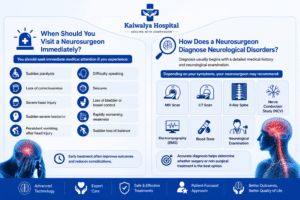
When Should You Visit a Neurosurgeon Immediately?

You should seek immediate medical attention if you experience:

  • Sudden paralysis
  • Loss of consciousness
  • Severe head injury
  • Sudden severe headache
  • Persistent vomiting after head injury
  • Difficulty speaking
  • Seizures
  • Loss of bladder or bowel control
  • Rapidly worsening weakness
  • Sudden loss of balance

Early treatment often improves outcomes and reduces complications.


How Does a Neurosurgeon Diagnose Neurological Disorders?

Diagnosis usually begins with a detailed medical history and neurological examination.

Depending on your symptoms, your neurosurgeon may recommend:

  • MRI Scan
  • CT Scan
  • X-Ray Spine
  • Nerve Conduction Study (NCV)
  • Electromyography (EMG)
  • Blood Tests
  • Neurological Examination

Accurate diagnosis helps determine whether surgery or non-surgical treatment is the best option.


Why Choose Dr. Mukesh Sharma – Neurosurgeon in Indore?

Patients looking for an experienced Neurosurgeon in Indore trust Dr. Mukesh Sharma for his expertise in managing complex brain and spine disorders with precision and compassion.

Dr. Mukesh Sharma specializes in:

  • Brain Tumor Surgery
  • Spine Surgery
  • Skull Base Surgery
  • Neurotrauma Management
  • Spinal Endoscopy
  • Slipped Disc Treatment
  • Sciatica Treatment
  • Brain Hemorrhage Management
  • Nerve Compression Disorders
  • Advanced Neurosurgical Procedures

With years of surgical experience and participation in national and international neurosurgical conferences, he focuses on delivering safe, evidence-based treatment using modern neurosurgical techniques.


Why Choose Kaiwalya Hospital?

Kaiwalya Hospital offers comprehensive neurosurgical care with advanced technology and patient-focused treatment.

Patients choose the hospital because of:

  • Experienced Neurosurgeon
  • Advanced Diagnostic Facilities
  • Modern Neurosurgical Equipment
  • Comprehensive Brain & Spine Care
  • Personalized Treatment Plans
  • Emergency Neurotrauma Care
  • Compassionate Patient Support
  • Evidence-Based Medical Care

The goal is to provide accurate diagnosis, timely treatment, and better recovery for every patient.


Summary

Consulting a Neurosurgeon in Indore at the right time can help diagnose and treat serious brain, spine, and nerve disorders before they lead to permanent complications. Symptoms such as persistent headaches, severe back pain, numbness, weakness, seizures, dizziness, or difficulty walking should never be ignored. Early diagnosis and timely treatment play a crucial role in improving recovery and protecting neurological health.


Frequently Asked Questions (FAQs)

When should I consult a neurosurgeon?

You should consult a neurosurgeon if you experience persistent headaches, severe neck or back pain, numbness, weakness, seizures, balance problems, or symptoms related to the brain, spine, or nerves.

Does every spine problem require surgery?

No. Many spine conditions can be treated with medication, physiotherapy, or minimally invasive procedures. Surgery is recommended only when necessary.

Can a neurosurgeon treat slipped discs?

Yes. Neurosurgeons diagnose and treat slipped discs using both non-surgical and advanced surgical techniques depending on the severity of the condition.

What tests are performed before neurosurgery?

Your doctor may recommend MRI, CT scan, X-rays, blood tests, or nerve conduction studies to accurately diagnose the condition.

Can neurological diseases be treated successfully?

Many neurological conditions can be effectively managed or treated when diagnosed early. Timely consultation significantly improves treatment outcomes.


Conclusion

Recognizing the early warning signs of neurological disorders can prevent serious complications and improve long-term health. If you experience persistent headaches, severe back pain, numbness, weakness, seizures, or any symptoms affecting the brain, spine, or nerves, do not delay medical evaluation. Dr. Mukesh Sharma, an experienced Neurosurgeon in Indore, provides advanced diagnosis and comprehensive treatment for brain and spine disorders, helping patients receive timely, safe, and effective neurosurgical care.

Medical awareness banner showing early warning signs that indicate when to consult a neurosurgeon, featuring a brain illustration, neurological symptoms, and Dr. Mukesh Sharma at Kaiwalya Hospital.

When Should You Consult a Neurosurgeon? Early Warning Signs You Should Never Ignore – Dr. Mukesh Sharma